
🌞 Introduction: Surviving the Texas Summer Heat
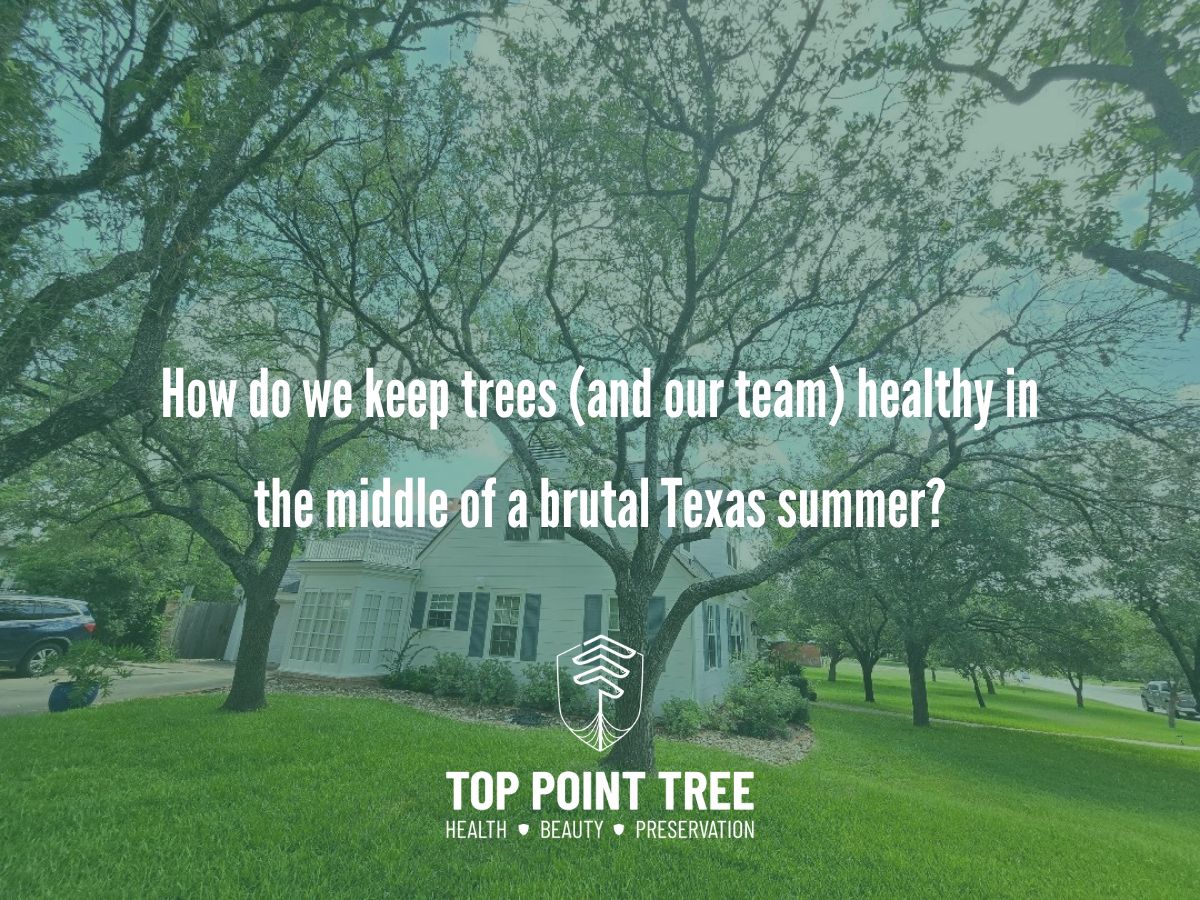
Summers in Texas are notoriously unforgiving. With daytime highs frequently soaring above 100°F, prolonged drought conditions, and intense sun exposure, both trees and the professionals who care for them face extreme challenges. At Top Point Tree Company, we believe that keeping trees healthy through the summer requires a combination of strategic care, expert arboricultural knowledge, and thoughtful planning-all while ensuring the safety and well-being of our team in the field.
Using guidelines and resources from the International Society of Arboriculture (ISA), this guide explains how we prepare for, endure, and overcome the harshest conditions of the year while protecting Texas landscapes and our hard-working crew.
🌿 1. Understanding the Challenges of a Texas Summer
Central Texas summers are defined by:
- High temperatures: Often exceeding 100°F for days or weeks at a time.
- Low humidity: Dry air increases plant evapotranspiration, leading to water loss.
- Frequent drought conditions: With little rainfall, soil dries out rapidly, impacting tree root health.
- Intense UV radiation: Sunscald and leaf scorch are common, especially in young or thin-barked trees.
According to the International Society of Arboriculture (ISA), environmental stress like heat and drought are among the leading contributors to long-term tree decline. Stressors weaken tree systems, making them more vulnerable to pests, diseases, and structural failure.
💧 2. Tree Health: Summer Survival Strategies
A. Smart Watering Practices
Proper irrigation is the cornerstone of summer tree health. In accordance with ISA recommendations:
- Deep watering is far more effective than frequent shallow watering. We encourage clients to:
- Water early in the morning to reduce evaporation.
- Target the critical root zone and beyond.
- Use soaker hoses or drip irrigation for controlled saturation.
- Young trees need water more frequently-up to twice per week during the first 2–3 years.
- Mature trees, particularly natives, can often thrive with deep soaking every 2–4 weeks during drought if mulched and maintained properly.
B. Mulching for Moisture Retention
ISA guidelines emphasize mulching to maintain root zone health:
- Apply 2-4 inches of organic mulch (like hardwood chips or pine bark).
- Extend mulch outward toward the drip line.
- Avoid “volcano mulching”-never pile mulch against the trunk, as it traps moisture, restricts oxygen availability, and encourages decay.
Benefits include:
- Soil temperature regulation
- Weed suppression
- Increased microbial activity
- Improved moisture retention
C. Soil and Root Zone Management
The heat stresses more than just leaves-it can severely impact roots. Our team performs:
- Soil aeration: Especially in compacted clay soils common to Central Texas, to improve oxygen penetration.
- Deep root fertilization: Provides available resources to roots, promotes soil health, and also aerates.
ISA research supports the integration of organic matter and microbial diversity in urban soils for increased drought tolerance and nutrient uptake.
🛠️ 3. Adjusting Tree Care Practices for Heat
During the summer, we modify our standard practices to protect trees from additional stress.
A. Strategic Pruning
While heavy pruning is best done in late winter or early spring, light summer pruning is safe if done properly. We focus on:
- Removing deadwood: Reduces the attraction of pests and disease, conserves tree energy for compartmentalization, and mitigates risk associated with failing dead branches.
- Eliminating crowding or rubbing branches: Improves airflow, sunlight penetration, and prevents injury.
We follow ANSI A300 standards (endorsed by ISA) and never top trees-a harmful practice that leads to weak regrowth and sun exposure damage.
B. Fertilization and Disease Control
Fertilization during intense heat is done only when needed. Overfertilizing during drought can burn roots. Instead, we:
- Use slow-release organic fertilizers where and when appropriate.
- Monitor for heat-related pests like spider mites or borers, which target weakened trees.
🧍♂️ 4. Keeping Our Team Safe in the Heat
A healthy tree crew is just as important as healthy trees. We follow rigorous safety protocols to protect our field team from Texas heat.
A. Hydration and Break Scheduling
- We follow OSHA and ANSI Z133 recommendations for hydration:
- 16–32 ounces of water per hour during work in the heat.
- Access to electrolyte drinks to replenish minerals lost to sweat.
- Enforce a strict work/rest cycle: Crews take mandatory breaks every 45–60 minutes during high heat.
B. Protective Equipment and Gear
Our crews are equipped with:
- Cooling towels and neck wraps
- Ventilated helmets and moisture-wicking clothing
- UV-rated safety glasses and sunscreen SPF 50+
ISA encourages climate-appropriate PPE to reduce the risk of heat illness without compromising safety.
C. Training and Emergency Preparedness
All Top Point Tree crew members receive:
- Heat stress recognition training
- First aid certification for heat exhaustion and heat stroke
- Access to a team-wide heat illness emergency action plan
We also utilize OSHA’s Heat Safety Tool App to monitor risk levels in real-time and adjust schedules accordingly.
📋 5. Community Education and Client Support
We believe in empowering our clients with knowledge to care for their trees effectively.
A. Summer Tree Health Checkups
We offer seasonal inspections where an ISA Certified Arborist will:
- Check for signs of heat stress
- Evaluate irrigation efficiency
- Provide actionable recommendations for care and risk mitigation
B. Homeowner Resources
We share ISA-approved best practices via:
- Blog posts (like this one!)
- Educational emails and social media tips
- On-site walkthroughs and coaching with our team
Some of our go-to ISA educational resources for clients include:
- TreesAreGood.org – Practical tree care advice from ISA
- Tree Owner Information – Printable guides and seasonal tips
🌳 6. Drought-Resistant Tree Selection and Planting
Long-term health starts with selecting the right trees. We guide clients toward native and adaptive species like:
- Cedar elm (Ulmus crassifolia)
- Bur oak (Quercus macrocarpa)
- Mexican sycamore (Platanus mexicana)
- Live oak (Quercus virginiana)
We plant in cooler months (October–February), allowing root systems to establish before the summer heat. ISA and Texas A&M Forest Service both recommend fall planting for maximum drought resilience.
🏗️ 7. Planning Ahead: Long-Term Urban Tree Resilience
Healthy trees in the summer don’t happen by accident-they’re the product of year-round attention.
We help clients create comprehensive tree care plans that include:
- Annual risk assessments by certified arborists
- Preventive pruning schedules
- Long-term irrigation strategies
- Ongoing tree and soil health monitoring
ISA strongly recommends proactive maintenance over reactive storm or drought response-saving property owners money and improving safety.
✅ Conclusion: How Top Point Tree Protects Trees and Teams
Brutal Texas summers are a true test of endurance for both trees and people. With temperatures rising and droughts intensifying, the need for expert tree care is greater than ever. At Top Point Tree, we stay ahead of the heat by combining ISA best practices, advanced tools, and a deeply rooted respect for both our landscapes and our people.
📞 Ready for a summer check-up? Contact us today to schedule a mid-year tree assessment and keep your property thriving-safely and sustainably.