
In Central Texas, especially across the Brazos Valley, trees are more than just background greenery—they’re essential to property value, curb appeal, and comfort. Shade trees provide relief from the Texas sun, young trees bring new life to landscapes, and mature trees add timeless beauty. But without regular attention, even the healthiest tree can become hazardous or lose its shape.
That’s where professional pruning comes in. Far from being a cosmetic task, pruning plays a critical role in tree health, safety, and longevity. At Top Point Tree Company, our ISA certified arborists follow industry standards to ensure every cut supports the long-term well-being of your trees.
Why Tree Pruning Matters
Removing Dead and Diseased Branches
- Safety is one of the primary reasons for pruning.
- Dead or diseased branches weaken the tree and pose risks to people, vehicles, or structures below.
- Prompt removal prevents pests and fungi from spreading.
- Protects the tree’s overall health.
Encouraging Proper Growth
- Pruning shapes a tree’s structure for long-term strength.
- Removing small branches with proper techniques allows the tree to direct energy toward stronger, larger branches and a stable trunk.
- Reduces the risk of storm damage and promotes longer tree life.
- Targeted pruning encourages new growth, helping the canopy develop evenly.
- Improves sunlight exposure for flower buds on fruit trees, supporting healthier production.
For deciduous trees in Central Texas, pruning is an especially good idea because it helps balance rapid seasonal growth with long-term stability.
Timing Is Everything
Pruning isn’t just about cutting—it’s about knowing when to cut.
- Late winter and the dormant season are typically the best times for major pruning. Trees are less vulnerable to stress, insects, or disease when growth has slowed.
- Early spring is an excellent time to fine-tune shaping and encourage new branches as growth resumes. For fruit trees and spring-flowering trees, careful timing ensures maximum blooms without sacrificing structure.
- Summer pruning and late summer are helpful for controlling fast-growing areas, managing lower branches, or performing light pruning to keep clearance around homes and driveways.
Each tree type and season demands different techniques, which is why working with professionals who understand local conditions is so valuable.
The Science of the Pruning Cut
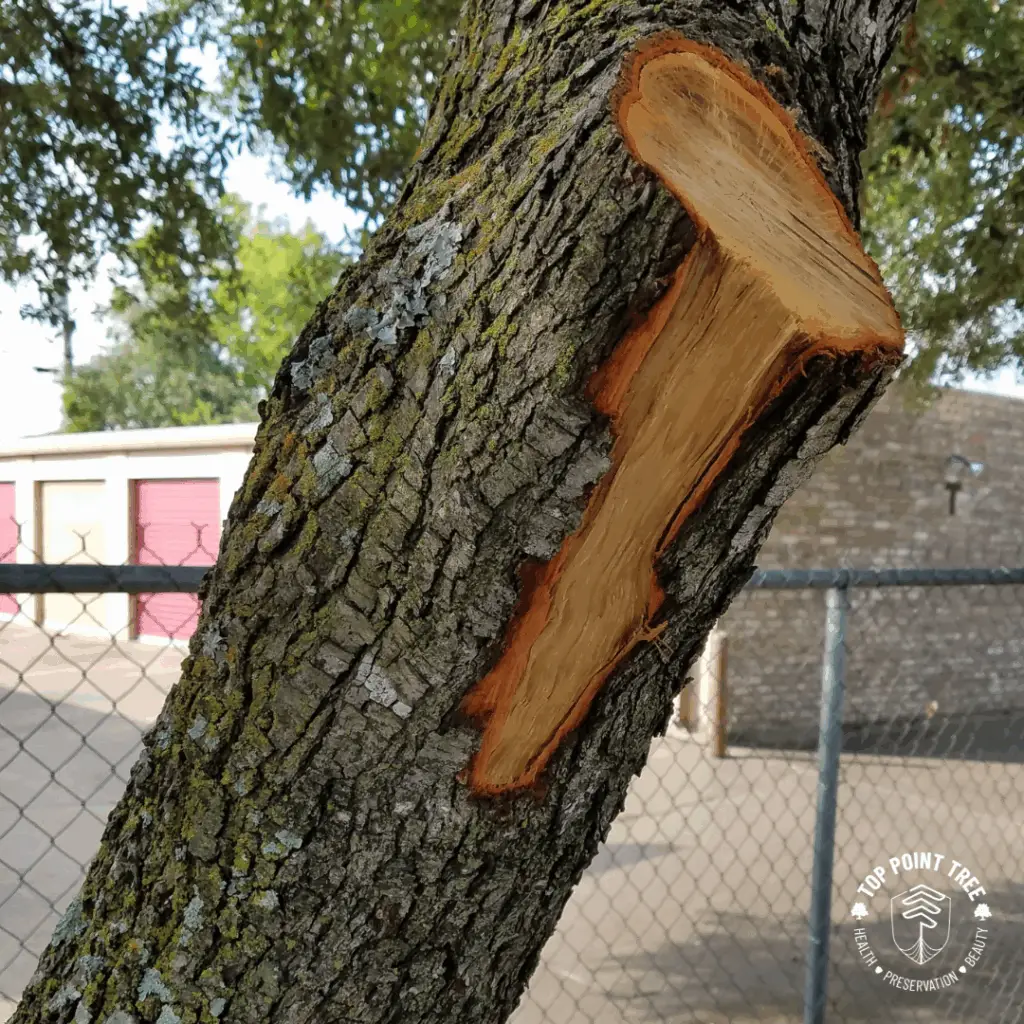
A correct pruning cut is more than just a snip—it’s a precise action that determines whether the tree heals properly. Arborists always cut just outside the branch collar and the branch bark ridge, the natural protection zones where a branch meets the trunk. Cutting too close to the main stem or leaving a stub can damage the tree, making it vulnerable to decay.
Certain techniques should be avoided:
- Flush cuts (cutting flat against the trunk) harm a tree by removing protective tissues and slowing healing.
- Heading cuts (shortening a branch without regard for side shoots) can cause weak, fast-growing shoots that compromise structure.
Professional arborists also focus on making clean cuts that heal quickly. Using sharp hand pruners for a small tree, hedge shears for shrubs or hedges, or saws with long handles for high tree limbs ensures wounds close faster, reducing risks of disease.
By understanding these methods, arborists prevent lasting damage and encourage sustainable tree work that supports both form and function.
Managing Different Tree Types
Young Trees
- Pruning sets the foundation for a lifetime of strength.
- Removing lower branches early encourages upward growth.
- Careful shaping ensures balanced, healthy trees.
- Early investment prevents costly issues years later.
Mature Trees
- Require a gentler approach—avoid over-pruning or removing too many large branches.
- Arborists use targeted pruning to enhance stability and manage weight distribution.
- Maintenance prevents hazards and supports longevity.
- Large trees in Central Texas (oaks, pecans, etc.) benefit from periodic maintenance.
Fruit Trees and Landscape Trees
- Fruit trees need regular shaping to maximize sunlight and airflow.
- Proper trimming strengthens flower buds, increases fruit yield, and prevents weak branches from breaking.
- Landscape trees are planted mainly for beauty and symmetry.
- Light pruning maintains appearance without removing too much foliage.
- Encourages new growth that highlights natural form.
Woody Plants and Shrubs
- Pruning applies to ornamental shrubs as well.
- Shaping with hedge shears encourages density and controls size.
- Proper care allows shrubs to complement larger trees in the yard.
Safety and Property Protection
Reducing Storm Hazards
- Texas weather is unpredictable, and strong winds can tear off weak or overloaded branches.
- Pruning eliminates risks by removing dead branches.
- Thinning crowded areas improves resilience.
- Lightening the load on larger branches helps before storms arrive.
Improving Clearance and Access
- Strategic pruning prevents interference with homes, driveways, and utility lines.
- Controlling lower branches improves visibility.
- Proper care ensures shade trees don’t obstruct walkways or create hidden hazards.
- Maintaining clearance enhances both safety and aesthetics.
Tools, Equipment, and Expertise
Professional pruning isn’t just about knowing where to cut—it’s also about having the right tools. From sharp hand pruners for small branches to saws with long handles for larger branches, and specialized pruning equipment for high or heavy tree limbs, arborists use gear designed for both safety and precision.
Attempting DIY tree care without proper tools can result in jagged cuts, damage to the tree, or even personal injury. A trusted tree service will always use the right pruning tools to handle both light pruning and structural work.
Aesthetic Benefits
While safety and health come first, the visual impact of pruning shouldn’t be underestimated. Well-maintained trees bring harmony and structure to your landscape. By thinning crowded areas, reshaping crowns, and encouraging new growth, arborists highlight the natural beauty of shade trees and landscape trees.
Sunlight reaches lawns and gardens more easily, making your entire property look brighter and more inviting. It’s always a good idea to view pruning not only as maintenance but as an upgrade to your outdoor environment.
Trust the Experts at Top Point Tree
Tree pruning is more than trimming—it’s a proactive investment in the health, safety, and beauty of your property. Whether it’s guiding the growth of young trees, maintaining the stability of mature trees, training fruit trees, or safely managing large trees, the team at Top Point Tree has the knowledge and tools to handle it all.
Our ISA Certified Arborists, including Colby Lee and Thomas Burns, are trained in tree biology, proper pruning techniques, risk assessment, and safe use of pruning equipment. From shaping small trees with hand pruners to managing large branches with specialized saws, every decision is backed by science and years of experience.
Keep your property safe, your trees thriving, and your landscape beautiful. Trust Top Point Tree’s experts to give your trees the attention they deserve—season after season.